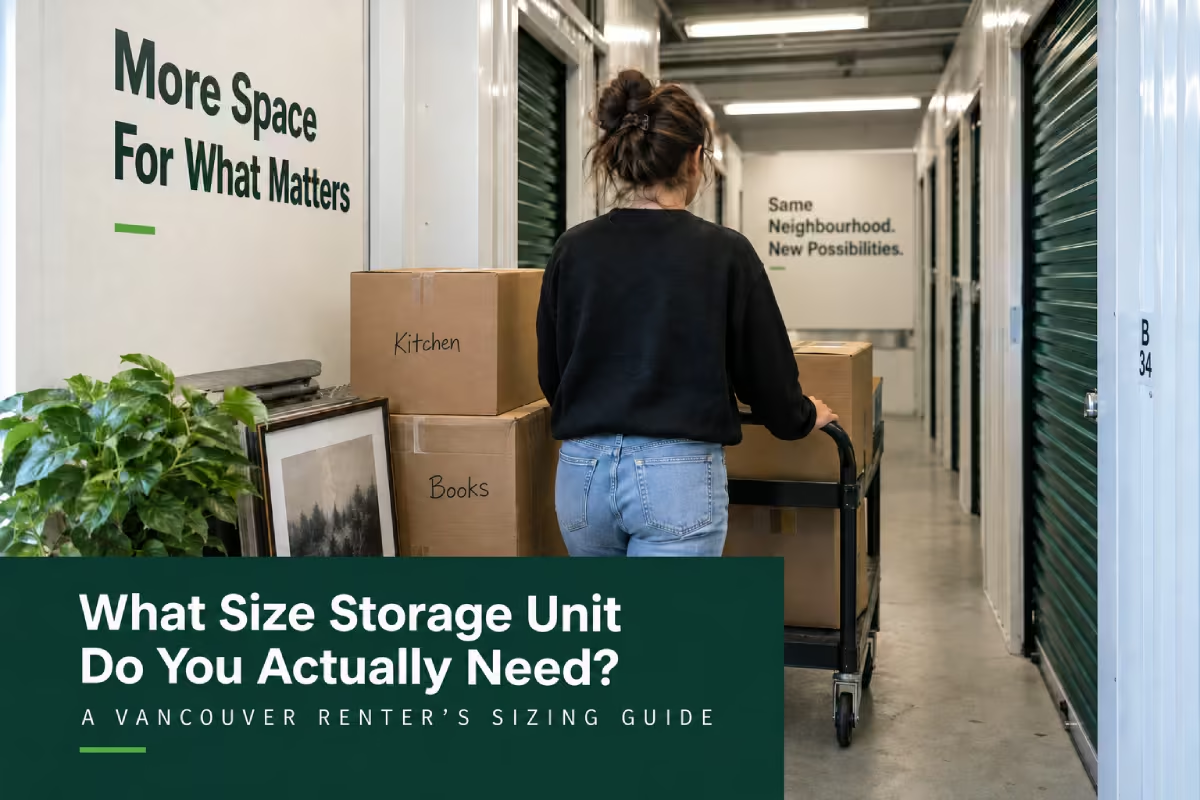
What Size Storage Unit Do You Actually Need? A Vancouver Renter's Sizing Guide
Choosing a storage unit sounds simple until you start comparing sizes.
Is a 5x5 enough for your boxes? Can a 5x10 hold furniture from a one-bedroom apartment? Do you really need something closer to a 10x10?
If you are asking what size storage unit do I need, the best answer does not start with dimensions. It starts with what you actually plan to store. A few seasonal boxes need very different space from a mattress, sofa, dining table and everything else from an apartment.
This guide breaks down common storage unit sizes, what typically fits inside them, and how to choose enough room without paying every month for space you do not use.
What Size Storage Unit Do I Need?
Here is the short version:
Treat this as a starting point, not a strict rule.
Two people living in identical one-bedroom apartments may need completely different storage sizes. One may own little more than a bed, desk and sofa. The other may have several bookcases, bikes, a dining set and 40 boxes.
The easiest way to choose is to make a quick inventory before looking at unit dimensions. General Store-All offers storage units in Vancouver in small, medium and large sizes, so you can compare actual dimensions once you know roughly how much you need to store.
Start With What You Are Actually Storing
Before asking how big of a storage unit do I need, spend five minutes listing your belongings. You do not need to count every coffee mug. Focus on the items that take up meaningful space.
Write Down Your Large Items
Start with things such as:
- Mattress and bed frame
- Sofa or sectional
- Dining table and chairs
- Dressers
- Desks
- Bookcases
- Armchairs
- Bikes
- Large appliances
- Patio furniture
- Filing cabinets
- Large storage bins
Then estimate how many boxes you expect to have.
For example:
Storage load A
- 8 moving boxes
- 2 suitcases
- Christmas decorations
- Golf clubs
- Winter tires
That is probably a small-storage problem.
Storage load B
- Queen mattress
- Bed frame
- Dresser
- Desk and chair
- 15 boxes
- Bicycle
Now you are much more likely to need a medium unit.
Storage load C
- Sofa
- Queen bed
- Dining table
- Several chairs
- Two dressers
- Bookshelf
- Television
- 30 boxes
- Miscellaneous household items
That calls for considerably more room. Thinking this way is more reliable than simply hearing that someone else stored their apartment in a particular size.
How Big Is a 5x5 Storage Unit?
A standard 5x5 storage unit has about 25 square feet of floor space. An easy way to picture it is a large closet or small walk-in closet.
A 5x5 unit can be useful for:
- Several moving boxes
- Storage bins
- Seasonal decorations
- Luggage
- Sports equipment
- Small chairs
- Lamps
- A small desk
- Compact shelving
- Smaller household items
It generally is not the first choice for storing an entire apartment. The exact amount you can fit also depends on the shape and height of your belongings, how well they stack, and the unit's usable dimensions.
General Store-All's smallest options include compact lockers and units with similar small-storage purposes rather than one standard 5x5 configuration. You can compare the available small storage units in Vancouver if you mainly need space for boxes, seasonal gear or personal overflow.
Who Is a Small Unit Best For?
A smaller unit is often enough if you are:
- Clearing out an apartment closet
- Storing belongings between school terms
- Making room for a new baby
- Storing winter or summer equipment
- Keeping boxes during a short renovation
- Moving a few belongings out of a shared home
- Trying to reclaim your spare room
The biggest advantage is simple: you are not paying for floor space you do not need.
How Big Is a 5x10 Storage Unit?
A 5x10 storage unit has approximately 50 square feet of floor space. Picture a space about as wide as a walk-in closet but roughly twice as long as a 5x5. This is where storage becomes much more practical for furniture.
Depending on the size of your belongings and how you pack them, a 5x10 may accommodate a combination such as:
- Mattress and bed frame
- Dresser
- Nightstands
- Chairs
- Small dining table
- Bicycle
- Television
- Several storage bins
- A substantial number of boxes
It can be a useful size for someone moving out of a studio or storing part of a one-bedroom apartment. General Store-All currently offers an actual 5x10 option among its medium storage units, along with nearby dimensions such as 4x10, 5x12 and 6x8.
That matters because you do not always have to choose a perfect industry-standard dimension. If a 5x10 seems slightly too small, a 5x12 may give you the extra room you need without jumping all the way to a much larger unit.
How Big Is a 10x10 Storage Unit?
A standard 10x10 storage unit provides about 100 square feet of floor space. That is roughly the footprint of a small bedroom. This amount of space can be useful when you are storing furniture and belongings from multiple rooms rather than just clearing household overflow.
A unit around this size might be considered for:
- A larger one-bedroom apartment
- A small two-bedroom move
- Several large furniture pieces
- Mattresses and bed frames
- Dining furniture
- Dressers
- Boxes and storage bins
- Bikes
- Appliances
- Household items during renovations
The amount it holds still depends heavily on how much furniture you own. At General Store-All, the large-unit range includes a 7x14 unit with approximately 98 square feet of space, which is very close in floor area to a standard 10x10.
You can compare that with other large storage unit sizes, including larger configurations when you have more to store.
Storage Size for a Few Boxes or Seasonal Items
If you simply need to get some belongings out of your home, do not automatically rent a conventional full-size room. Small storage lockers can handle situations such as:
- Holiday decorations
- Camping gear
- Ski or sports equipment
- Off-season clothing
- Luggage
- Documents
- Collectibles
- Extra kitchenware
- A handful of moving boxes
This is especially useful for Vancouver apartment renters who have enough living space but very little closet or storage space. A compact unit lets you move things you rarely use without turning storage into a large monthly expense.
If you do not have furniture to store, start with the small storage options before considering a medium unit.
Storage Size for a Studio Apartment
For a studio apartment, a medium unit is often a sensible starting point. A typical studio load might include:
- Mattress
- Bed frame
- Small sofa or armchair
- Television
- Desk
- Dresser
- Kitchen boxes
- Clothing
- 10 to 20 moving boxes
Something around the 5x10 range may work if your furniture is compact and can be disassembled. But do not choose based on the words "studio apartment" alone.
A furnished 500-square-foot studio and a minimalist 300-square-foot studio can produce completely different storage loads. If you own a bulky sofa, oversized mattress or large shelving, measure those pieces before deciding.
Storage Size for a One-Bedroom Apartment
A one-bedroom apartment usually moves you firmly into medium or large storage territory.
You may be storing:
- Queen or king mattress
- Bed frame
- Sofa
- Coffee table
- Television and stand
- Dining table
- Chairs
- Dresser
- Desk
- Kitchen belongings
- Books
- 20 or more boxes
A 5x10 may work for a lighter one-bedroom load, particularly if furniture can be disassembled and boxes can be stacked efficiently. If you own more furniture or want room to walk through the unit, something larger may be more comfortable. This is where it is useful to compare medium and larger Vancouver storage units instead of relying on a generic online calculator.
Storage Size for a Two-Bedroom Home or Larger Move
Once belongings from several rooms are involved, start looking at larger units. A two-bedroom move may include multiple beds, a sofa, dining furniture, dressers, desks, chairs and dozens of boxes.
A unit around 100 square feet may be a reasonable starting point for some households, but it is not guaranteed to fit every two-bedroom home. You may need more space if:
- You have large furniture
- You own a sectional sofa
- You are storing major appliances
- You cannot disassemble much furniture
- You have a garage, balcony or basement full of additional items
- You want regular access to your belongings
- You expect to add more items later
General Store-All's large storage units currently range from approximately 72 to 130 square feet, giving you several steps between a medium unit and the largest available spaces.
How to Choose Between Two Storage Unit Sizes
This is where most people get stuck. Say you think you can squeeze everything into a 5x10, but a slightly larger unit is also available.
Which one should you choose?
Ask yourself these questions.
Will You Need Anything From the Unit?
If you are loading everything once and taking everything out six months later, tighter packing may be fine.
If you need to visit regularly, leave room for an aisle. Otherwise, the box you want will inevitably end up behind the mattress, underneath four other boxes and next to the dresser at the very back.
Are You Adding More Items Later?
If the first move-in is only phase one, leave some spare capacity. Moving into a larger unit later can be much more annoying than choosing a little extra room at the start.
Can Your Furniture Be Disassembled?
Tables, bed frames and shelving can take up much less space when broken down properly. Removing table legs alone can make stacking easier.
Can Your Boxes Be Safely Stacked?
Uniform, sturdy boxes use space much more efficiently than loosely packed bags and containers of different shapes. If everything can be stacked safely, you may need less floor area.
Is the Smaller Unit Actually Saving Enough Money?
Compare the real monthly difference.
If the larger option costs only slightly more and makes the unit much easier to use, the extra space may be worthwhile. But if you are storing items you will not touch for several months and know everything fits safely in the smaller unit, there may be no reason to pay for empty space.
How Packing Changes the Amount of Storage You Need
The way you pack can change your storage requirement considerably. Two people with the same belongings can end up needing different units simply because one packs more efficiently.
Disassemble What You Can
Take apart:
- Bed frames
- Tables
- Desks
- Removable shelving
- Furniture with detachable legs
Keep screws and hardware in labelled bags.
Use Similar-Sized Boxes
Boxes with consistent dimensions are easier to stack and leave fewer awkward gaps.
Put Heavy Boxes at the Bottom
Heavy, sturdy boxes should form the base of your stacks. Keep lighter and more fragile items above them.
Use Furniture Space
Empty dressers, cabinets and shelving units waste useful storage capacity. Where appropriate, use drawers or other empty furniture spaces for smaller belongings.
Keep an Aisle If You Need Access
Maximum packing density is not always the goal. If you will visit frequently, leave a narrow route through the unit so you can reach important boxes without unloading everything.
For more options, you can compare all Vancouver storage unit sizes and current availability before deciding.
Common Storage Unit Sizing Mistakes
Renting Based Only on the Number of Bedrooms
"One-bedroom apartment" is useful shorthand, but it is not a measurement. Your belongings matter more than your floor plan.
Forgetting About Awkward Furniture
Large sofas, mattresses and assembled tables can dictate the unit you need even when most of your belongings fit into boxes. Measure bulky items first.
Choosing Too Much Space "Just in Case"
Extra space feels safe, but unused square footage still costs money every month. Give yourself sensible breathing room rather than automatically moving up several sizes.
Choosing Too Little Space to Save a Few Dollars
The opposite mistake can also cost you. If everything has to be packed dangerously high, fragile belongings are crushed, or you cannot get to anything, the smaller unit was probably not the right choice.
Ignoring Access
Think about how you will actually use the unit after move-in. Long-term storage that you rarely visit can be packed differently from business inventory or household belongings you need every few weeks.
Choose Space for Your Belongings, Not an Arbitrary Size
If you are still wondering how big of a storage unit do I need, do not start with 5x5, 5x10 or 10x10.
Start with your stuff.
List the large furniture. Estimate your boxes. Measure anything bulky. Decide if you need regular access. Then choose the smallest unit that fits everything safely and still works for the way you plan to use it.
That approach is much more reliable than paying for a larger unit because you are unsure or squeezing everything into a space that clearly does not work.
Once you know roughly what you are storing, compare General Store-All's small, medium and large storage units in Vancouver to find the closest fit. If you have narrowed down your size and are ready to move ahead, you can also reserve a storage unit online.