Storage Unit Tips: How to Pack, Organize, and Protect Your Belongings
Renting a storage unit gives you extra space. Using that space properly is what keeps it useful.
It is easy to start with an empty unit and end up with a wall of boxes, furniture you cannot reach, missing belongings and fragile items buried underneath things that should never have been stacked on top of them.
A little planning prevents most of those problems. The best storage unit tips are not complicated: pack belongings properly, use the height of the unit, keep things you may need accessible, protect furniture before storing it, and create a simple system for finding everything again.
Whether you are storing belongings during a move, renovation, downsizing project or simply clearing space at home, this guide will help you use your unit efficiently without turning it into another cluttered room.
Plan Your Storage Unit Before You Start Packing
One of the most useful self storage tips is to decide what is going into the unit before you start carrying things through the door. Start with a simple inventory. You do not need to document every individual item. Group belongings into useful categories such as:
- Furniture
- Kitchen items
- Books
- Clothing
- Seasonal decorations
- Sports equipment
- Documents
- Tools
- Electronics
- Family keepsakes
This immediately gives you a better idea of how much space you need and what type of packing materials will be required. It can also stop you from renting a unit that is much larger than necessary.
If you have not chosen your unit yet, use our storage unit size guide to compare common storage loads before deciding. You can then review available storage units in Vancouver based on the amount you actually need to store.
Before moving anything into the unit, think about access too. Ask yourself:
What am I unlikely to touch for six months?
That can go toward the back.
What might I need next month?
Keep it closer to the front.
A little planning before move-in is much easier than trying to reorganize a completely full unit later.
Pack Boxes Properly for Storage
Good storage starts before you reach the facility. Boxes need to survive being carried, stacked and potentially left in place for months.
Use sturdy boxes that are appropriate for what is inside them. Heavy belongings such as books should usually go into smaller boxes. A huge box full of books may become difficult to lift and place too much weight on the bottom.
Larger boxes are better for lighter items such as:
- Bedding
- Pillows
- Clothing
- Lampshades
- Soft household goods
Do not overfill boxes until the sides bulge. A box that no longer has a flat top is difficult to stack safely. At the same time, avoid leaving large empty spaces inside boxes containing fragile belongings. Items can shift when the box is carried.
Use suitable packing material to fill gaps and protect anything breakable.
Label Boxes Properly
Writing Kitchen on every box from the kitchen is better than nothing, but you can do much better.
Try:
Kitchen - baking dishes and serving bowls
Bedroom - winter clothing
Office - tax records 2024–2025
Specific labels save time later. Place labels on more than one side of the box when possible so you can still identify it after stacking. You can also number your boxes.
For example:
Box 12 - Books
Then keep a simple note on your phone showing what is inside Box 12.
Use Similar-Sized Boxes Where Possible
Boxes with consistent dimensions are easier to stack. A collection of random cartons, bags, baskets and partially filled containers creates awkward gaps and makes the stack less stable.
You do not need every container to be identical, but a reasonably consistent system makes much better use of the available space. General Store-All also keeps common packing and moving supplies on-site if you need additional boxes or materials while moving belongings into storage.
How to Store Furniture Long Term
Furniture needs more preparation than most boxes.
If you are wondering how to store furniture long term, start by cleaning it before it goes into the unit. Dust, crumbs, dirt and moisture are not things you want trapped underneath furniture covers for months. Make sure everything is clean and completely dry.
Disassemble Large Furniture
Take apart furniture where it is practical and safe to do so.
This may include:
- Bed frames
- Tables
- Desks
- Shelving
- Removable chair legs
- Modular furniture
A dining table with its legs removed takes up considerably less usable floor space than a fully assembled table. Keep screws, bolts, and other hardware in labelled bags. A useful approach is to tape or securely attach the bag to the relevant furniture piece so you do not have to search for hardware months later.
Protect Furniture Surfaces
Use appropriate furniture covers, moving blankets or other breathable protection against dust and scratches. Be careful about sealing furniture while it is damp. Moisture trapped against a surface for a long period can create problems that were not there when the furniture went into storage.
Pay extra attention to:
- Wood
- Upholstered furniture
- Mattresses
- Leather
- Painted finishes
Store Furniture Strategically
Place large, sturdy furniture toward the back or sides of the unit if you are unlikely to need it regularly.
Use furniture shapes to your advantage. For example, lightweight boxes may fit underneath a sturdy table rather than leaving that area empty.
Drawers can also hold small, lightweight items where appropriate. Avoid creating unnecessary pressure on fragile furniture simply to save a little space.
The goal is efficient storage, not squeezing something into every possible gap. For larger furniture loads, compare medium and large storage unit options before move-in rather than forcing oversized belongings into a unit that is difficult to use.
How to Maximize Storage Unit Space
If you want to know how to maximize storage unit space, think vertically as well as horizontally. An empty unit has much more usable volume than its floor area alone suggests. But vertical space needs to be used safely.
Put Heavy Items at the Bottom
Build stacks from strongest to lightest. Heavy boxes should generally stay low, while lighter containers can go higher. Do not place heavy cartons on boxes containing:
- Glassware
- Electronics
- Fragile decorations
- Delicate kitchenware
Use Shelving When It Makes Sense
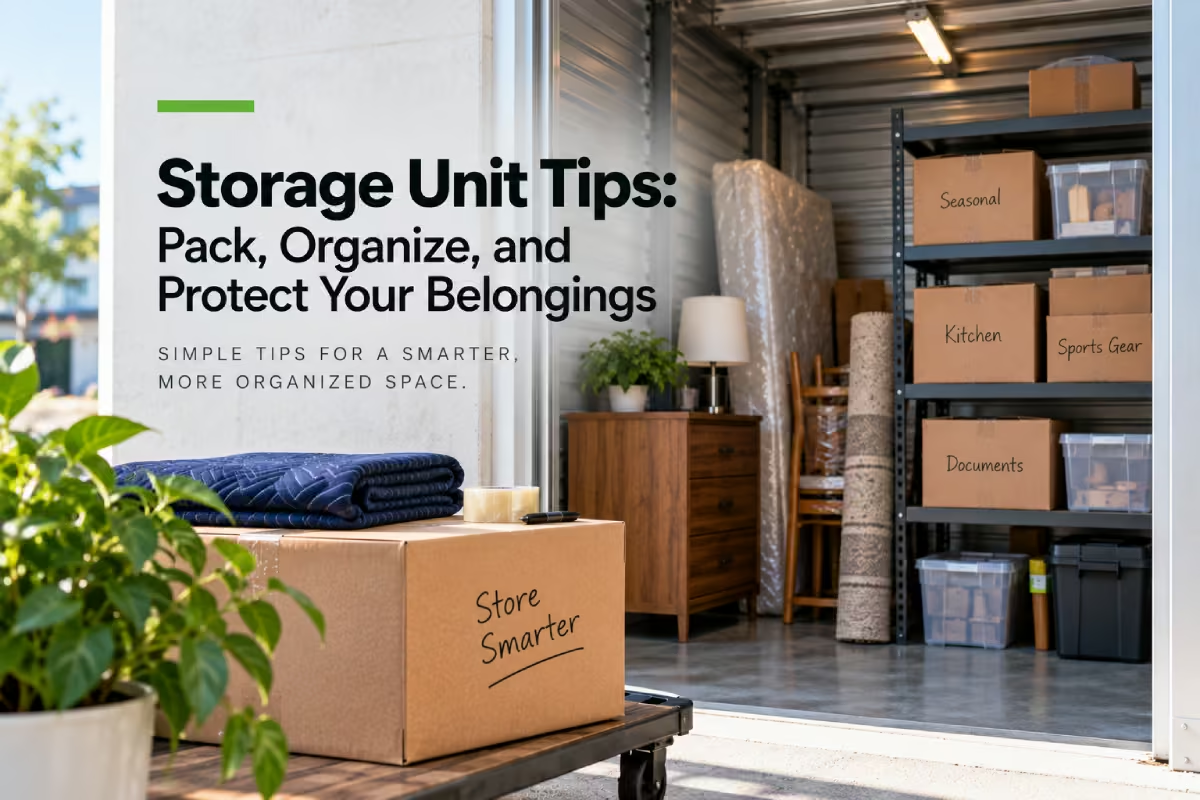
Freestanding shelving can be useful if you visit the unit frequently. Instead of building tall stacks that need to be dismantled every time you want the bottom box, shelves allow individual containers to remain accessible.
They can be especially useful for:
- Business supplies
- Tools
- Documents
- Collectibles
- Seasonal items
- Frequently used household belongings
Use Furniture Footprints
A table occupying six square feet of floor space does not necessarily need to waste all the space underneath it. Where safe, use the area beneath sturdy furniture for boxes or containers. The same principle can apply to shelving and other open furniture.
Store Long Items Vertically When Appropriate
Some long, lightweight items may take less floor space when safely stored upright. The important word is safely. Nothing should be positioned in a way that makes it likely to fall when you open the unit or remove another item.
Do Not Pack the Entire Unit Wall to Wall
This is one of the more important storage unit ideas to remember. Maximum capacity is not always maximum usefulness. If you need regular access, leave a narrow aisle.
Being able to walk toward the back of the unit can be worth more than fitting two extra boxes into the middle. If you are packing the unit once and will not open it again until everything comes out, tighter packing may be reasonable. Think about how you will actually use the space.
Organize the Unit So You Can Find Things Later
Organization does not need to be complicated. You simply need to know roughly where things are. One easy method is to create zones.
For example:
Back wall
Long-term furniture and items you rarely need.
Left side
Seasonal belongings.
Right side
Books, household boxes and kitchen items.
Front
Things you expect to retrieve first.
You could also organize by room:
- Bedroom
- Kitchen
- Office
- Living room
- Garage
The best system is the one that will still make sense to you six months from now. Keep labels facing outward wherever possible. If you have 25 or 30 boxes, create a quick inventory on your phone or in a spreadsheet.
You might write:
- Box 1–5: books
- Box 6: winter clothing
- Box 7–9: kitchen
- Box 10: family photos
- Box 11–12: office records
If you later need the winter clothing, you already know you are looking for Box 6 rather than opening 12 containers. For customers primarily storing household belongings during a move, renovation, or space shortage, GSA also offers residential storage in South Vancouver.
Protect Belongings During Longer-Term Storage
If your belongings will stay in storage for a few weeks, your approach may be different from storing them for a year. Longer-term storage deserves a little more preparation. Make sure everything is clean and dry before move-in.
This is especially important for:
- Furniture
- Clothing
- Rugs
- Outdoor belongings
- Fabric items
- Appliances
Do not put something away damp because you are in a hurry. Give it time to dry completely first.
Clean Appliances
If you are storing a refrigerator, freezer or similar appliance, remove food and clean it properly before storage. Appliances should be prepared according to manufacturer guidance, and doors may need to remain positioned appropriately to prevent stale conditions inside.
Protect Important Documents
Paper records, photographs and similar belongings should be packed carefully rather than left loose. Use suitable containers and keep important paperwork organized so you can retrieve it without sorting through unrelated boxes.
Think About Temperature-Sensitive Belongings
Furniture, documents, electronics and other sensitive belongings may benefit from a more stable indoor environment. General Store-All offers temperature-controlled storage options in Vancouver, so consider what you are storing rather than choosing only by size.
Check the Unit Occasionally
If you are keeping belongings in storage for a long period and have access to the unit, an occasional visit can be useful. Make sure boxes remain stable, labels are readable and nothing has shifted. You may also realize that some belongings no longer need to remain in storage.
What Should You Avoid Putting in a Storage Unit?
Not everything belongs in self storage. Specific rules vary by facility, so always confirm the storage provider's policies. Generally, items that may be restricted or inappropriate include:
- Perishable food
- Flammable materials
- Explosives
- Hazardous chemicals
- Items that can leak
- Wet belongings
- Illegal items
- Living animals
- Living plants
Do not assume something is acceptable simply because it physically fits inside the unit. Ask first if you are uncertain.
There are also things you technically may be able to store but probably should reconsider. These include belongings with little value that you are only keeping because you do not want to make a decision.
If an item costs $20 to replace and you pay to store it for three years without using it, keeping it may not make financial sense. Storage works best for things you genuinely have a reason to keep.
Common Storage Unit Mistakes
One of the most common mistakes is choosing the wrong unit size. Too large, and you may pay for unused space. Too small, and everything becomes difficult to stack, protect and retrieve.
Another mistake is arriving without a plan and putting things into the unit in whatever order they come off the vehicle. That usually means the belongings you need first end up at the back.
People also underestimate the value of good labels. After six months, five identical brown boxes look exactly the same. Other common mistakes include:
- Using damaged boxes
- Making unstable stacks
- Putting heavy boxes on fragile ones
- Storing furniture while damp
- Losing furniture hardware
- Blocking access to everything at the back
- Keeping items that should have been donated or discarded
- Forgetting what is inside the unit
Most of these problems are avoidable. Pack properly before arriving, decide on a simple layout and give yourself enough space to use the unit safely.
A Well-Packed Storage Unit Saves You Work Later
A storage unit should make your home, move or renovation easier. If opening the door reveals unstable stacks and you have no idea where anything is, the extra space is not doing its job very well.
Plan the layout before move-in. Use good boxes. Label everything. Protect furniture properly. Take advantage of vertical space without creating unsafe stacks, and keep the things you may need within reach.
Most importantly, do not treat the unit like somewhere to throw belongings and deal with them later. A little organization at the beginning can save you hours when it is time to find something or move everything back out.
If you are still deciding how much room you need, compare General Store-All's small, medium and large storage units in Vancouver before choosing your space.