
Downsizing Your Home? Here's How Storage Makes It Painless
Downsizing sounds simple on paper: move into a smaller home and take fewer things with you. Then you start opening closets.
Furniture you have owned for years, boxes of family photos, things your children left behind, holiday decorations, books, tools, dishes you only use twice a year. Suddenly, downsizing is not really about square footage. It is about making dozens of decisions about belongings that may still matter to you.
The good news is that you do not have to decide everything in one weekend.
The best downsizing tips focus on creating a manageable process. Decide what deserves space in your new home, let go of what no longer serves you, and give yourself more time with the belongings you are not ready to make a final decision about.
Here is how to downsize your home without turning the process into one giant stressful cleanout.
Start Downsizing Before You Have to Move
One of the best decluttering tips is also one of the simplest: start earlier than you think you need to. Trying to sort an entire home while also packing, changing addresses, arranging movers and preparing for moving day puts unnecessary pressure on every decision.
If you have time, start several weeks or even a few months before the move. You do not need to empty entire rooms immediately.
Begin with one category or one small area at a time:
- One closet
- One kitchen cabinet
- One bookshelf
- One drawer
- One storage room
- One section of the garage
- One group of seasonal belongings
Small decisions add up. Getting rid of two boxes today may not feel important, but repeating that process every weekend can leave you with significantly less to deal with by moving day.
Use the Keep, Store, Sell, Donate Method
If you are wondering how to declutter your home, giving every item one of four destinations makes the process much easier.
Keep
These are belongings that deserve space in your new home. They may be things you use regularly, furniture that fits the new space, clothing you wear, or personal items you genuinely want around you.
Store
These are things you want to keep but do not necessarily need inside your home right now.
Storage can make sense for:
- Seasonal belongings
- Family keepsakes
- Furniture you may use again
- Photo albums
- Important records
- Hobby equipment
- Items being saved for children or family members
If you need time before making permanent decisions, residential storage in South Vancouver can give you somewhere to keep those belongings without filling the new home.
Sell
Furniture, appliances, collectibles and other items with resale value may be worth selling instead of moving. Be realistic about the effort involved.
An item you hope to sell for $30 may not be worth photographing, listing, answering messages about and arranging pickup for if you have an entire house to clear.
Donate
Usable belongings that no longer fit your life may be far more useful to someone else. Donation is often one of the easiest ways to reduce the amount you have to move while avoiding the feeling that everything is simply being thrown away.
Start With the Easy Rooms
Do not begin your downsizing project with the box of family photos you have not opened in 15 years. Start where decisions are easier.
Good first areas include:
- Pantry
- Bathroom
- Linen closet
- Laundry room
- Cleaning cupboard
- Spare kitchen cabinets
Expired products, worn towels, duplicate kitchen tools and things you never use are usually easier to sort than sentimental belongings.
This gives you momentum.
Once you have made hundreds of easy decisions, you will be much more comfortable deciding what stays when you reach harder rooms.
Declutter for the Home You Are Moving Into
One of the biggest mistakes people make when downsizing is asking:
"Do I still like this?"
That question is not enough.
Instead, ask:
"Does this deserve space in my next home?"
You may still like a large dining table. But if the new dining area comfortably fits a table for four, keeping an eight-person table does not solve anything.
You might own three sets of dishes you still like, but your new kitchen may only have room for one. Downsizing works best when you make decisions based on the space you are moving into rather than the space you currently have.
That means considering:
- Number of bedrooms
- Closet space
- Kitchen storage
- Garage or basement space
- Size of living areas
- Available shelving
- Outdoor storage
- Furniture dimensions
You are not trying to fit your old house into a smaller one. You are deciding what belongs in the next version of your home.
Measure Your New Space Before Choosing Furniture
Furniture creates some of the hardest downsizing decisions because it takes up so much room. Before deciding what moves with you, measure the new space.
Measure:
- Bedroom walls
- Doorways
- Living room dimensions
- Dining area
- Closets
- Hallways
- Elevator dimensions if applicable
- Available storage areas
Then measure your large furniture.
A sectional that looked perfectly normal in your current living room may dominate a smaller condo. A king-size bed might technically fit in the new bedroom but leave almost no usable space around it.
Knowing the measurements removes a lot of uncertainty. Instead of asking whether you should keep something, you can sometimes answer the question with a measuring tape.
What Should You Put Into Storage When Downsizing?
Storage is most useful when it solves a temporary or practical problem. It should not become a place where every difficult decision disappears forever.
Good candidates for storage include belongings that are important but do not need to occupy your everyday living space.
Seasonal Items
Holiday decorations, camping gear, winter equipment and other seasonal items may only be used a few times each year. They can take up valuable closet space the rest of the time.
Family Keepsakes
Photo albums, childhood belongings, heirlooms and family memorabilia may have significant emotional value even if you rarely use them. You do not need to display every meaningful possession for it to be worth keeping.
Furniture You May Need Again
Maybe you are moving temporarily. Maybe your child will need the bedroom furniture next year.
Maybe you know you are likely to move into a larger home again. In situations like these, storing quality furniture can make more sense than selling it now and replacing it later.
Items Waiting for Family Members
Downsizing often uncovers belongings intended for children or relatives.
Instead of forcing everyone to collect those items before your moving date, temporary storage can give the family time to sort things properly.
Hobby or Seasonal Equipment
Golf clubs, skis, camping gear, hobby supplies and similar items do not necessarily need year-round space inside a smaller home. For lighter loads, a small storage unit may be enough without paying for a full room-sized space.
What Should You Avoid Putting Into Storage?
Not everything that leaves your home should go into a storage unit. Be careful about storing things simply because throwing them away feels difficult.
Think twice before storing:
- Broken furniture you do not intend to repair
- Clothing you have not worn for many years
- Outdated electronics with little practical value
- Duplicates you do not need
- Low-value items that would cost less to replace
- Boxes you have moved several times without opening
- Things you are storing only because you feel guilty getting rid of them
A useful question is:
"If I did not already own this, would I pay money every month to keep it?"
If the answer is no, it may belong in the sell, donate or dispose category instead.
How Storage Takes the Pressure Off Big Decisions
Downsizing can create an artificial deadline. You may feel as if every belonging must be assigned a permanent fate before moving day.
It does not. Temporary storage gives you a fifth option:
Decide later.
That can be valuable for items you are genuinely unsure about. Maybe you do not know if a cabinet will work in the new home until you live there. Maybe your children need time to decide which family belongings they want.
Maybe the move itself is already demanding enough without sorting 30 years of possessions at the same time. General Store-All offers month-to-month storage units in Vancouver, which can be useful when you need extra space during a transition but do not know exactly how long the process will take.
The important part is to treat storage as breathing room, not permanent procrastination. Set a date to revisit what you stored after the move. Three or six months later, you may find many decisions much easier.
Deal With Sentimental Belongings Differently
Sentimental belongings deserve their own process. Trying to evaluate them using the same rules as kitchen utensils rarely works. You may have objects that are almost worthless financially but deeply important personally. Instead of asking whether the item is "useful," ask:
- What memory does this represent?
- Would a photo of it preserve the memory?
- Is this something I would want my family to keep?
- Do I have several objects connected to the same memory?
- Would I notice if this were gone?
- Am I keeping this because I want it or because I feel guilty?
You also do not need to make sentimental decisions quickly.
Create a clearly labelled "review later" group if necessary. The goal of downsizing is not to strip your home of personality or history. It is to make room for the belongings that matter most.
How to Declutter Without Creating a Bigger Mess
Anyone who has attempted a serious declutter knows how quickly things can get worse before they get better.
You empty a closet onto the floor.
Then you open three boxes.
Then you start sorting a bookshelf.
Three hours later, the entire room looks like a moving truck exploded inside it.
Avoid this by working in small, finishable sections.
Complete One Area Before Starting Another
Do not empty the next cupboard until you have dealt with the first one.
Have Containers Ready
Set aside boxes or bags for:
- Donations
- Items to sell
- Storage
- Recycling
- Garbage
This stops sorted belongings from forming new piles around the house.
Remove Donations Regularly
Do not create a donation pile that sits in your garage for two months. Once a few bags or boxes are ready, move them out.
Put Storage Items Into Proper Boxes
If something has already been designated for storage, pack and label it immediately. You are reducing the number of decisions still sitting around the house.
Choose the Right Storage Size for Downsizing
If you decide storage is part of your downsizing plan, do not automatically choose a large unit. Start by separating everything that will actually go into storage. Then look at:
- Number of boxes
- Furniture dimensions
- Mattresses
- Shelving
- Seasonal equipment
- Any items that cannot be stacked
For a handful of boxes and personal belongings, a small unit may be enough. If you are storing a mattress, furniture and multiple boxes, you may need a medium option. Several rooms of furniture may require a larger space. Our full storage unit size guide explains how to compare common unit sizes based on what you are actually storing. You can then check current storage unit sizes and pricing before choosing.
Make Your Storage Unit Easy to Use Later
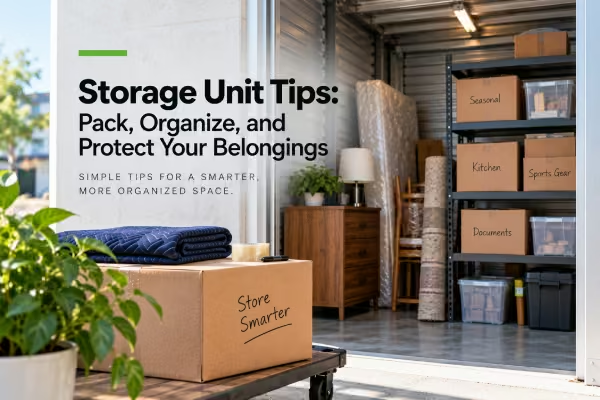
Downsizing does not end when the storage unit door closes. Pack it so you can actually find things later.
Label Every Box Clearly
"Kitchen" is better than nothing.
"Kitchen: serving dishes, glassware and roasting pans" is much better.
Keep an Inventory
A simple note on your phone can tell you what is in storage without opening 20 boxes.
Put Important Items Near the Front
If you know you will need holiday decorations in two months, do not bury them behind a sofa and six boxes of books.
Leave a Small Walkway
If space allows, leave enough room to reach items toward the back.
Keep Similar Items Together
Put seasonal items in one area, family keepsakes in another and furniture together. Good organization makes temporary storage far more useful.
Downsizing Does Not Have to Mean Deciding Everything Today
The hardest part of downsizing is rarely packing the boxes. It is deciding what stays.
Give yourself enough time to work through your home gradually. Keep what belongs in your next chapter, sell or donate what no longer serves you, and do not force permanent decisions about meaningful belongings just because moving day is approaching.
Storage can give you breathing room during that transition. It lets you move into your new home without filling every closet on day one, while giving you time to decide what you truly want to keep.
If you have already sorted your belongings and need somewhere for the items that are staying with you, explore residential storage in South Vancouver or compare available storage unit sizes and pricing.